October is when giving gets interesting.
The year is far enough along that we can see what your income looks like and how your portfolio has performed. There’s still enough runway to structure a gift the right way. By December, many of the good options have closed, namely benefitting from Qualified Charitable Distributions (QCDs) and Donor-advised Funds (DAFs).
The families who get the most out of their generosity start this work in the fall. Here’s what to put in motion now.
Why October Beats December for Charitable Giving
Every piece of year-end giving runs through an institution, and institutions slow down exactly when you need them to move.
Donor-advised fund sponsors, IRA custodians, and transfer agents all hit their heaviest volume in the last two weeks of December. A securities transfer that clears in three days in October can take two weeks in late December. Paperwork rejected for a small error in October has time to be corrected. The same error found on December 27th ends the conversation for that tax year.
Illiquid gifts are a different scale of problem. Real estate, business interests, and other hard-to-value assets need an independent appraisal, and the charitable sponsor has to review and accept the asset before anything moves. That process runs weeks to months. We’ve helped clients donate property that would have been difficult to sell, and the outcome was excellent: a charitable deduction, no capital gains, and a giving intention finally fulfilled. The work started in the summer.
If an illiquid gift is on your list for this year, that work needs to begin now.
Donor-advised Funds: Fund Them in October
A Donor-advised Fund (DAF) is the workhorse of year-end giving. You fund the account and take the deduction in that tax year. Grants go out to the charities you choose on whatever schedule suits you, this year or a decade from now subject to the sponsor’s policies.
That structure solves a timing problem many families have. You know you want to give, and you haven’t decided where. Funding the account secures the tax year while the decision stays open.
It also supports bunching, which matters more starting in 2026. Under the One Big Beautiful Bill Act, the first 0.5% of your adjusted gross income in charitable contributions is nondeductible. On $2 million of AGI, that’s $10,000 of giving that produces no deduction at all. If you’re in the top bracket, your tax savings for deductions are also now capped at 35 cents on the dollar.
Both changes reward concentration. Making one large gift and pausing for a year or two clears that floor once instead of every year, while the charities you support keep receiving steady distributions from the fund.
Act now if: you’re giving appreciated securities, a concentrated position, or anything that isn’t cash. Start the transfer in October. Cash contributions have more room, but can still get held up. Get them done by the end of November. If you wait too long, the DAF sponsor may not hit the deadline. Remember, your check needs to clear by December 31st to count.
Qualified Charitable Distributions: The Deadline is Earlier Than You Think
If you’re 70½ or older, you can send money directly from your IRA to a qualifying charity. The distribution counts toward your required minimum distribution and stays out of your taxable income entirely. Because the money never touches your return, a QCD sidesteps both the 0.5% floor and the 35% cap. For families taking RMDs they don’t need, this is often the most efficient charitable dollar they give all year.
Two timing traps catch people every year.
First, the first dollars out of your IRA count toward your RMD. If you have automatic distributions scheduled, or you’ve already taken your RMD for the year, that money can’t be converted into a QCD after the fact. To count toward your RMD, the QCD has to happen first. You can do a QCD if you have only taken a partial amount of your RMD. The QCD benefit would be limited to difference of your RMD total for the year and the amount you have already withdrawn.
Second, the funds must leave the IRA by December 31. Most custodians issue a physical check to the charity, which means mail time and processing time on both ends. Custodians are slammed in December, so don’t count on a last minute contribution clearing in time.
Act now if: you have automatic RMD distributions scheduled, or you’re planning a QCD of any size. Contact your custodian in October.
Give the Right Asset
The most common giving mistake we see is generous people writing checks.
Cash may be the most expensive asset to give away. If you hold appreciated stock, a concentrated position from an old employer or a past liquidity event, real estate, or a business interest, those assets often make better gifts. You skip the capital gains you would have owed on a sale, and the charity receives full value because it doesn’t pay the capital gains tax either.
For families holding a large unrealized gain, this doubles as a portfolio tool. Giving appreciated shares lets you trim a concentrated position while supporting causes you care about, and you can repurchase the same position with cash at a higher basis.
Giving to Family
Year-end giving includes the gifts that stay in the family, and for many families we serve, that’s where the larger numbers live.
In 2026 the annual gift tax exclusion is $19,000 per recipient, and each spouse has their own. A couple with three children and six grandchildren can move a meaningful amount out of their estate every year with nothing more than a decision and a transfer.
Here’s why it matters more than the number suggests. An estate large enough to outpace what the family spends will keep growing on portfolio returns alone, and that growth compounds toward a future tax bill. Annual gifting slows it down, and every dollar you move out now takes its future appreciation with it.
The holidays are a natural moment for this. Many families write checks. Others direct the money where it compounds: 529 accounts for grandchildren, a trust, or a contribution matched to a grandchild’s earned income. Two more options are worth knowing. Tuition and medical expenses paid directly to the institution carry no gift tax consequence and don’t touch your annual exclusion. And a 529 can be superfunded with five years of exclusion gifts at once.
The Conversation Matters as Much as the Check
A wire transfer teaches nothing while a conversation can teach a lot. The most important thing you pass to the next generation is your values, and giving season is the most natural opening you get all year.
We encourage a family conversation in the fourth quarter as part of preparing your beneficiaries early for the wealth they may receive later. What are we giving this year, and why? What causes does this family care about, and where did that start? For families with a DAF or a foundation, bring the kids and grandkids into the grant decisions and let them make the case for something of their own.
Where We Fit in Charitable Giving
Good giving decisions need two views. Your CPA knows your income and deduction picture. If you’re our client, we know your balance sheet, which assets are best to give, and how a gift affects your estate and your portfolio.
Part of our job is making sure those views connect. Sometimes that’s a call with your CPA. Sometimes it’s getting them the cost basis, gift documentation, and projections they need before they ask. What matters is that nobody’s working from half the picture, and that the work happens without you having to broker it.
Your Fall Giving Timeline
Now through October: Review your income picture and decide what you’re giving. Start any illiquid gift, foundation, or trust work. Contact your IRA custodian about QCDs, especially if you have automatic distributions scheduled. Initiate DAF funding with appreciated securities.
Early to mid-November: Complete DAF funding. Confirm QCD checks have been issued. Identify which specific lots you’re giving.
December: Hold the family conversation. Make annual exclusion gifts. Confirm every transfer has settled before December 31.
Frequently Asked Questions
September or October. Cash gifts can be handled into November, but appreciated securities, QCDs, illiquid assets, and foundations all need more lead time than December allows.
Contributions must be complete by December 31, but aim for late October or early November so you can be sure your funds or your securities arrive and are processed in time. Illiquid assets should be underway months earlier because of valuation and sponsor review.
The first dollars distributed from your IRA count toward your RMD, and that can’t be undone. If you want to use the QCD as part of your RMD, it needs to happen before any other distribution. Otherwise, you can still do a QCD, but it will not be included as part of your RMD. You can do a QCD if you have taken a partial distribution year-to-date. The qualifying amount is the difference between your Total RMD and the amount you have withdrawn.
Appreciated assets held more than a year are often the better gift. You skip the capital gains, and the charity receives full value.
Bunching combines several years of giving into one tax year. Beginning in 2026, the first 0.5% of your AGI in charitable contributions is nondeductible, so concentrating gifts clears that floor once instead of having to strive to clear it annually.
In 2026 the annual exclusion is $19,000 per recipient, and each spouse has their own. Tuition and medical expenses paid directly to the institution fall outside that limit.
Close Your Tax Strategy Gap
Giving is one area where good planning shows up fast. It’s also one of the places we see successful families leaving opportunity on the table.
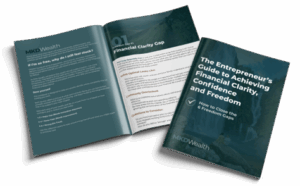
Our guidebook, The Entrepreneur’s Guide to Clarity, Confidence & Freedom, walks through the hidden gaps that keep accomplished entrepreneurs from feeling truly free. One of them focuses on tax strategy, and giving sits right in the middle of it. The self-assessment inside shows you where you stand and what to tackle first.
This material is for informational purposes only and should not be construed as tax, legal, or accounting advice. Please consult your tax professional or attorney regarding your specific situation.
This material is for educational purposes only and is not intended to provide specific advice or recommendations for any individual and does not take into consideration your specific situation. There is no assurance that the views or strategies discussed are suitable for all investors or will yield positive outcomes. Investing involves risks including possible loss of principal. Be sure to consult with a qualified financial advisor, legal, and/or tax professional before implementing any strategy discussed here.
This material is for educational purposes only and is not intended to provide specific advice or recommendations for any individual and does not take into consideration your specific situation. There is no assurance that the views or strategies discussed are suitable for all investors or will yield positive outcomes. Investing involves risks including possible loss of principal. Be sure to consult with a qualified financial advisor, legal, and/or tax professional before implementing any strategy discussed here.