The Two-Sided Coin of Prepared Grantors and Prepared Beneficiaries That Most Financial Advisors Never Address
There’s a shift that happens for the most intentional wealth creators: a quiet but profound reorientation in how they think about everything they’ve built.
It starts with a question that sounds simple but cuts deep:
Are you planning for the lifetime of you or the lifetime of your wealth?
Most financial planning is built around the frame of your lifetime. When do I retire? What do I need to live on? How do I minimize taxes before I die? These are reasonable questions, but they stop too soon. They treat the wealth creator as the finish line. And if you’ve spent decades building something meaningful, a business, a family, a legacy, you already know that you are not the finish line.
The wealth you’ve created has the potential to outlive you by generations. It can fund your grandchildren’s education, anchor your family’s values, empower causes you care about, and demonstrate to the next generation what it looks like to live with purpose and generosity. Or it can erode, fragment, and disappear within two or three generations, leaving behind little more than a memory of what once was.
What separates the two outcomes? Preparation.
At MKD Wealth, we work with successful entrepreneurs and multi-generational families who have already achieved financial freedom on paper but who haven’t yet fully answered the question that determines whether their wealth outlasts them: Are the right people prepared?
That means two groups. Your beneficiaries. And you.
The Shift: From “My Lifetime” to “The Wealth’s Lifetime”
When a wealth creator begins thinking about the lifetime of the wealth rather than just their own lifetime, everything changes. The time horizon extends, and the questions deepen. The urgency to prepare the next generation becomes real rather than theoretical.
This is actually one of the most liberating perspectives a successful entrepreneur can adopt. When you stop asking “what do I need?” and start asking “what does this wealth need to endure and thrive?”, you gain tremendous clarity about what actually matters.
You start asking:
- Are the people who will steward this wealth ready for the responsibility?
- Have I clearly communicated what I want this wealth to do, not just where I want it to go?
- Am I modeling, right now, the values I want to live inside this wealth for generations?
- Have I done my own inner work as the person transitioning this wealth, or am I leaving that undone?
These are questions your CPA is unlikely to raise. Your estate attorney probably won’t raise them either. But they are the questions that determine whether your wealth has a lifetime or just a shelf life.
Why 90% of Family Wealth Is Gone by the Third Generation
The statistic is jarring: approximately 90% of family wealth doesn’t survive to the third generation(1). Understanding why entrepreneurial wealth breaks down across generations reframes the entire planning conversation.
Most families invest enormous energy in the mechanics of wealth transfer: trusts, estate plans, tax strategies, titling. These tools are necessary, but they are entirely silent on the question of human readiness. A trust document cannot teach your grandchild what you believe about work, generosity, and purpose. An estate plan cannot instill the grit and humility that took you a lifetime to develop. That work falls to you. And it begins now, not at death.
If you’ve ever thought any of the following, you’re already sensing this gap:
- “I want to leave something meaningful, but I’m worried about creating entitlement.”
- “My kids are smart, but I’m not sure they’re ready for what I’m building.”
- “I’ve never sat down and really told my family what I want this wealth to mean.”
- “I worked so hard to build this. I want it to matter beyond my own lifetime.”
Those instincts are right. They’re pointing you toward the most important planning work you haven’t yet done.
(1)Roy O. Williams and Vic Preisser, Preparing Heirs: Five Steps to a Successful Transition of Family Wealth and Values (Bandon, OR: Robert D. Reed Publishers, 2014).
What Does a Prepared Beneficiary Look Like?
Before you can build toward a prepared next generation, you have to define what a prepared beneficiary means. Most families want their heirs to be prepared. Very few have taken the time to say what that actually looks like in practice.
A useful place to start: If you could go back and experience accumulating your wealth again, what would you want your children to know? What experiences, lessons, and capabilities did your journey give you that your heirs won’t have unless you intentionally build them?
5 Characteristics of a Prepared Beneficiary
In our work with families across Detroit and beyond, we’ve identified five key characteristics of a prepared beneficiary. These go deeper than financial literacy. They are the human qualities that allow someone to steward wealth responsibly rather than simply receive it.
1. Internal Compass
A prepared beneficiary knows who they are. They’re guided by something larger than their own self-interest: family values, faith, community, or a clear sense of purpose. They’re aware of the privilege that comes with inherited wealth, and they hold that awareness with humility rather than entitlement.
Wealth without an internal compass tends to erode. When a person’s identity becomes “I have money” rather than “I know who I am and what I stand for,” the wealth becomes a crutch and, eventually, a liability.
Ask yourself: Does your heir have a strong sense of identity and values that exists independently of what they may receive?
2. Takes Ownership
Prepared beneficiaries are active, not passive. They dig in, ask questions, lean into responsibility, and demonstrate a track record of accountability in their own lives and finances. They seek to learn and are willing to use the resources available to them. Crucially, they understand stewardship.
Ownership cannot be inherited. It has to be developed. For wealth to survive generations, each generation has to actively choose to be responsible for it.
Ask yourself: When challenges arise, does your heir step toward them or away from them?
3. Makes Thoughtful Decisions
There’s a difference between being smart and being wise. Prepared beneficiaries demonstrate mature, measured judgment: pausing to reflect, considering consequences, making financial decisions that are intentional rather than reactive. They’ve learned to live with some productive tension between what they want and what is right.
Ask yourself: If your heir received $1 million today, what would they do with it? How confident are you in that answer?
4. Coachable Spirit
Perhaps the most underrated quality on this list is the willingness to be led. Prepared beneficiaries value guidance. They’re humble enough to know they don’t have all the answers and open enough to seek wisdom from people with more experience. They carry the family’s vision forward rather than fighting against it.
A coachable spirit is what allows knowledge and values to actually transfer across generations. Without it, every generation starts from scratch.
Ask yourself: Is your heir genuinely open to feedback and guidance, or do they resist it?
5. Expresses Gratitude
A prepared beneficiary understands what it took to build what they’re inheriting. They’re aware of the grit, the sacrifice, the setbacks that preceded their opportunity. That awareness produces genuine gratitude: a deep, values-rooted sense of how fortunate they are and what they owe to the world in return.
Gratitude is the antidote to entitlement. To develop gratitude takes intentional cultivation.
Ask yourself: Does your heir demonstrate generosity and appreciation in their daily life, not just when it’s expected?
The Part Most Advisors Miss: Are You a Prepared Grantor?
Here’s the insight that changes the entire conversation.
Before going further, it helps to be clear on the term. In estate and wealth planning, a grantor is the person who creates and funds a trust or transfers wealth to others, typically a parent or grandparent who has built significant assets and is now thinking about how to pass them on. In short, if you’re the one who built it, you’re the grantor.
Thinking about the lifetime of your wealth rather than just your own lifetime puts the mirror back on you. For your wealth to outlive you well, you have to complete your own work as the person transferring it.
That’s what it means to be a prepared grantor. And it’s the part of this equation that few advisors in traditional wealth management address.
5 Characteristics of a Prepared Grantor
We’ve identified five characteristics of a prepared grantor: the kind of wealth creator who successfully transitions assets and values across generations.
1. Perseverance
The wealth you’ve created came from somewhere. It came from how you worked, how you persisted, how you made decisions under pressure, how you treated people, and what you believed about money and its purpose. That story is your most powerful legacy asset, and most of it is never formally transferred.
Prepared grantors are intentional about modeling the qualities that built the wealth: perseverance, stewardship, integrity, and continued personal growth. They leave a blueprint alongside the balance sheet.
Your heirs are watching. The question is whether what they’re observing is something they can build on.
2. Inner Peace
This characteristic requires honesty that most high-achievers find uncomfortable. Are you truly at peace, not just with your net worth, but with your relationship to it?
John D. Rockefeller, when asked how much is enough, famously replied: “Just a little more.” That drive lives inside many successful entrepreneurs. It’s the engine that built the wealth. But if it’s still running when it’s time to transition that wealth, it becomes an obstacle rather than an asset.
Prepared grantors have done the inner work. They’re not driven by anxiety or guilt around their wealth. They can hold it with security, give generously without fear, and genuinely enjoy what they’ve built. They can let go when the time is right.
Planning for the lifetime of your wealth starts here. A wealth creator who hasn’t found peace with what they’ve built will struggle to transfer it with grace.
Freedom isn’t just having enough. It’s knowing you have enough.
3. Prioritizes Relationships Individually
The families that successfully transition wealth across generations don’t treat their heirs as a collective. They know each beneficiary as an individual: their unique strengths, their specific vulnerabilities, their readiness level, their relationship to money. They’ve had real conversations, managed expectations honestly, and brought genuine care and empathy to each relationship.
Wealth transfer without relational depth creates confusion at best and conflict at worst. The trust document doesn’t know your kids. You do. That knowledge has to be exercised and communicated before it’s needed.
4. Clearly Communicates Vision
One of the most powerful things a grantor can do, and one of the least common, is to say clearly and out loud what they want their wealth to mean.
Beyond where the assets go, there’s the question of why. What values should guide how the wealth is used? What do you hope it enables for the next generation? What would make you proud, and what would break your heart?
Prepared grantors are willing to be vulnerable about these things. They share the vision while they’re alive to share it. They’re flexible and open to evolution, but they’re not silent. Silence doesn’t protect your family from hard conversations. It just defers those conversations until you’re no longer there to participate.
If the wealth is going to have a lifetime beyond yours, it needs a vision that outlasts yours too.
5. Intentional Impact, Starting Now
This may be the most important shift of all: moving from legacy as something you leave to legacy as something you live.
Prepared grantors don’t wait until death to make their mark. They’re intentionally generous right now, with their family, their community, their causes. They show their heirs what it looks like to deploy resources with purpose. They mentor and guide rather than control. They believe in the next generation and express that belief through how they engage, not just through what they bequeath.
Legacy isn’t what happens after you die. It’s what you live into starting today.
The work of preparing both grantors and beneficiaries is present work, not future work. The families who break the 90% statistic didn’t start planning at the last minute. They started living into their legacy long before the wealth transferred.
Designing for the Lifetime of Your Wealth
What does it actually look like to shift your planning from your lifetime to your wealth’s lifetime? It starts with asking different questions.
Instead of: “What do I need to live on?” Ask: “What does this wealth need in order to remain purposeful across generations?”
Instead of: “How do I minimize my estate taxes?” Ask: “What is my strategy for transitioning not just assets, but values, readiness, and vision?”
Instead of: “Is my estate plan current?” Ask: “Are the people named in that plan actually prepared to receive what I’m leaving, and do they know what I want it to mean?”
Instead of: “Have I done enough?” Ask: “Am I doing the work, right now, that will make this wealth last?”
The families who answer these questions honestly, and who seek the guidance to act on the answers, are the ones who become part of the 10% whose wealth endures.
Practical Steps to Start Preparation Now
You don’t have to have everything figured out to begin preparing your beneficiaries or yourself as the grantor. Here’s where to start:
- Name what “prepared” means to you. Write it down specifically. What characteristics, behaviors, and demonstrated track record would give you genuine confidence that your heirs are ready for greater responsibility?
- Have the conversations you’ve been deferring. Don’t wait for a crisis, a health scare, or a liquidity event. The earlier and more naturally these conversations happen, the less loaded they become. Start with values before you get to numbers.
- Give your heirs real financial responsibility now. Stewardship is learned through practice, not lecture. Involve them in giving decisions. Give them money to invest and hold them accountable. Let them make some mistakes while the stakes are still low.
- Do your own inner work as a grantor. Be honest about which of the five prepared grantor characteristics come naturally to you and which need development. Inner peace, clear communication, and the ability to let go are skills that require intentional effort.
- Write your ethical will. A letter to your heirs that captures your values, your life lessons, and your hopes for what you’re leaving behind. These non-financial documents are often what families treasure most, and they’re almost never written until it’s too late.
- Coordinate your team around a unified vision. Your estate attorney, CPA, and wealth advisor should all be working from the same picture of what you want this wealth to do, not optimizing their individual piece in isolation.
Ready to Think Beyond Your Own Lifetime?
The most successful wealth creators we work with have made one common mental shift: they stopped planning for themselves and started planning for the wealth they’re building. They stopped asking “what do I need?” and started asking “what does this wealth need to last?”
That shift doesn’t happen by accident. It happens with intention, with the right questions, and with an advisor who’s willing to go beyond the numbers.
If you’re a successful entrepreneur or multi-generational family who is ready to think about the lifetime of your wealth and not just your own, we’d love to start that conversation.
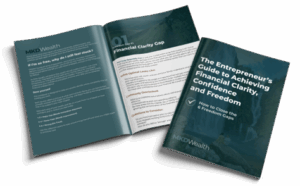
Begin with our free guidebook: The 6 Freedom Gaps for Entrepreneurs
Inside you’ll find a clear framework for the six areas, including Family Readiness, that quietly hold back even the most financially successful entrepreneurs from experiencing true freedom. It’s designed to give you a language for the gaps you’ve felt but may not yet have been able to name.
Download it here: mkdwealth.com/6-freedom-gaps-entrepreneurs

This material is for educational purposes only and is not intended to provide specific advice or recommendations for any individual and does not take into consideration your specific situation. There is no assurance that the views or strategies discussed are suitable for all investors or will yield positive outcomes. Investing involves risks including possible loss of principal. Be sure to consult with a qualified financial advisor, legal, and/or tax professional before implementing any strategy discussed here.
This material is for educational purposes only and is not intended to provide specific advice or recommendations for any individual and does not take into consideration your specific situation. There is no assurance that the views or strategies discussed are suitable for all investors or will yield positive outcomes. Investing involves risks including possible loss of principal. Be sure to consult with a qualified financial advisor, legal, and/or tax professional before implementing any strategy discussed here.